
How do deregistered cars end up on Singapore roads?
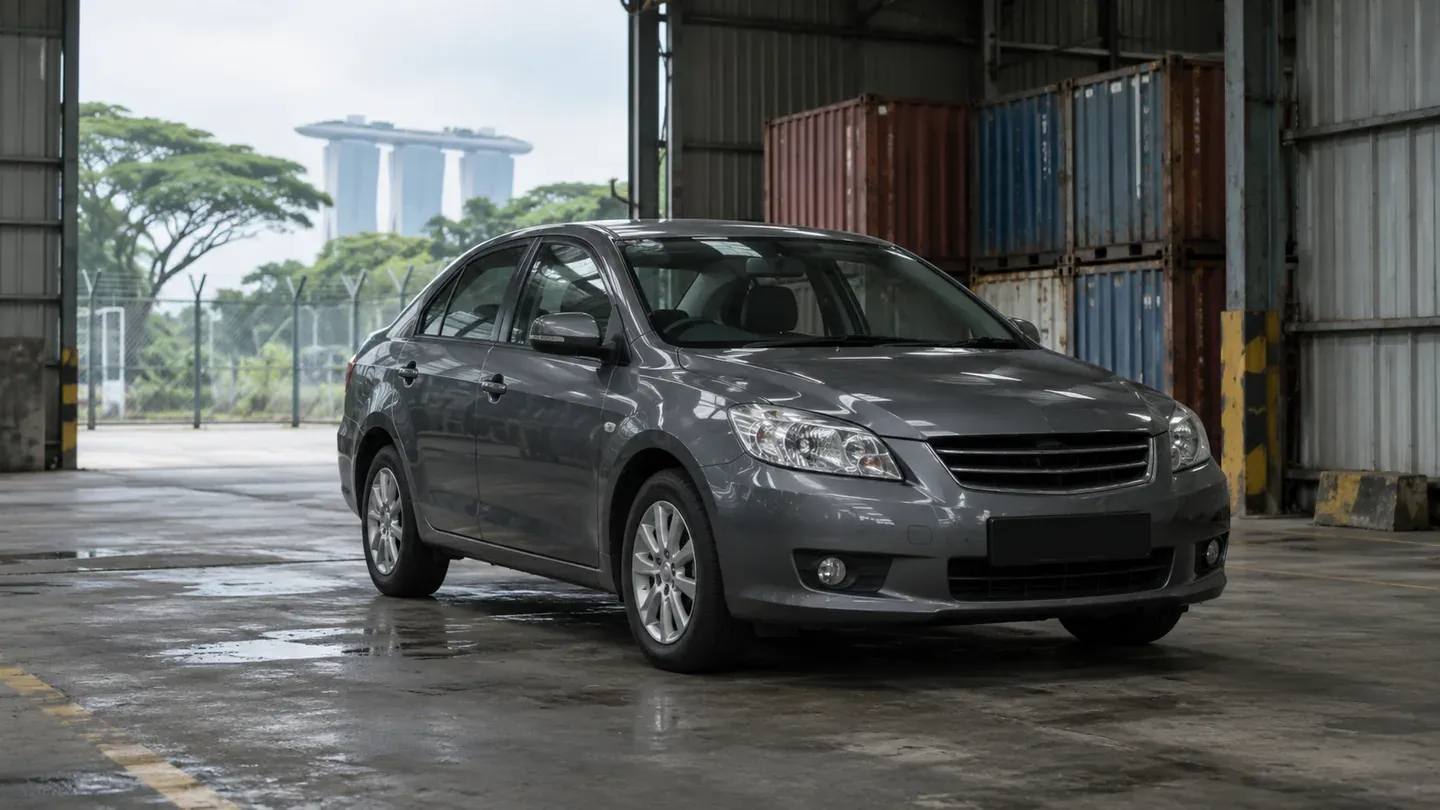
After the fatal Tampines Avenue 12 crash on 29 October 2026, the driver was charged with offences including using a deregistered car and displaying a false number plate. A motorcyclist and his pillion rider died in the collision.
How could a car that was supposed to be off the road still be driven? Deregistration cancels the registration. It doesn’t disable the engine or destroy the car. Someone still has to scrap it or export it, and that disposal process can be abused.
Deregistered doesn’t mean scrapped
A car can reach the end of its COE and still be mechanically capable of moving. But once deregistered, it can no longer legally be driven on Singapore roads.
Under LTA’s disposal process, the vehicle should go to an appointed scrapyard, be exported, or be stored at an appointed Export Processing Zone while awaiting export. Owners can engage a dealer to handle this.
The physical car can therefore remain intact after its registration ends. If someone keeps it instead of completing disposal, there’s still a vehicle available to drive illegally.
Even moving it to the scrapyard after deregistration requires towing or transport. The time allowed for disposal isn’t extra driving time.
How cars slip back into circulation
A 2021 court case involving illegal car sales and rentals showed how deliberate the abuse can be.
Cars were bought near COE expiry, then disguised with number plates copied from registered cars of similar make, model and colour. Identifying numbers were removed and in-vehicle units were swapped. False paperwork made the cars appear to have been exported or prepared for export, while they were sold or rented locally without checking whether customers could legally drive.
So a car could appear to have left Singapore in the records while continuing to circulate here under another car’s identity. A familiar-looking number plate proves very little (I’d struggle to spot the difference from the next lane).
That case explains one documented route. It doesn’t establish how the car in the Tampines crash was obtained.
How many cases have been detected?
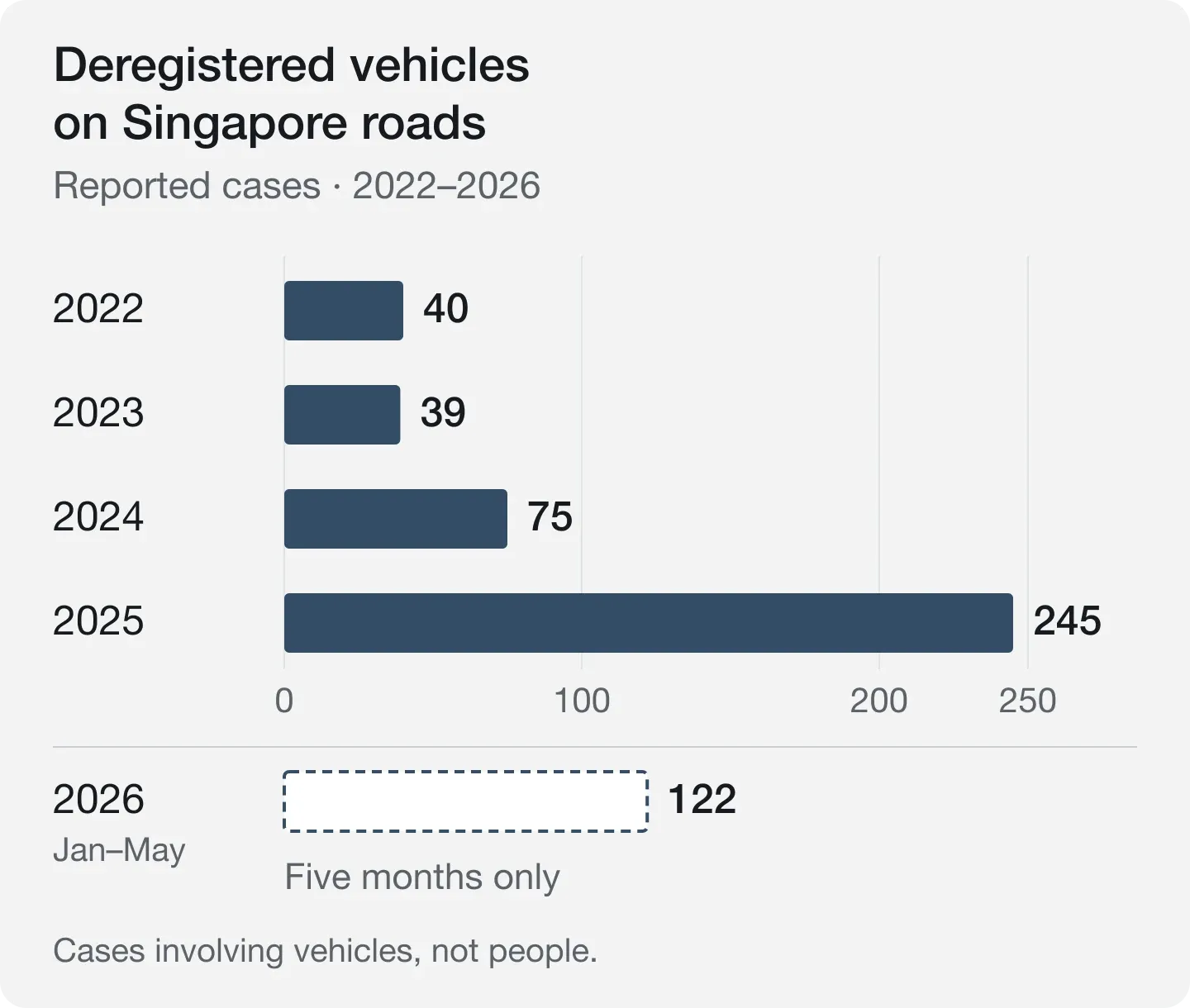
The chart shows reported cases involving deregistered vehicles on roads, rather than the number of people caught or the total number of cars deregistered each year. The category includes vehicles such as motorcycles too.
LTA reported 245 cases in 2025, up from 75 in 2024, about 3.3 times as many. The separate 2026 bar covers only January to May, so its shorter length doesn’t show an annual decline.
These are detected cases. They don’t tell us exactly how many such vehicles remain on the roads, and changes in enforcement can affect how many are found.
Stopping the supply before the next drive
These cars operate without valid insurance and outside regular inspection requirements. Authorities have also linked some to hit-and-run accidents and crimes, including drug trafficking.
Since 27 February 2026, keeping or using an unregistered or deregistered vehicle can bring a first offender a fine of up to $20,000, up to 2 years in prison, or both. Repeat offenders face double those maximums.
The planned Authorised Exporter Scheme tackles the disposal stage: exporters will have to use LTA-approved, secured premises and meet disposal requirements. LTA has announced at least a year’s transition before implementation, so it shouldn’t be mistaken for a system that’s already fully operating.
The car has to physically reach the scrapyard or leave the country. Paperwork alone won’t keep it off the road.